
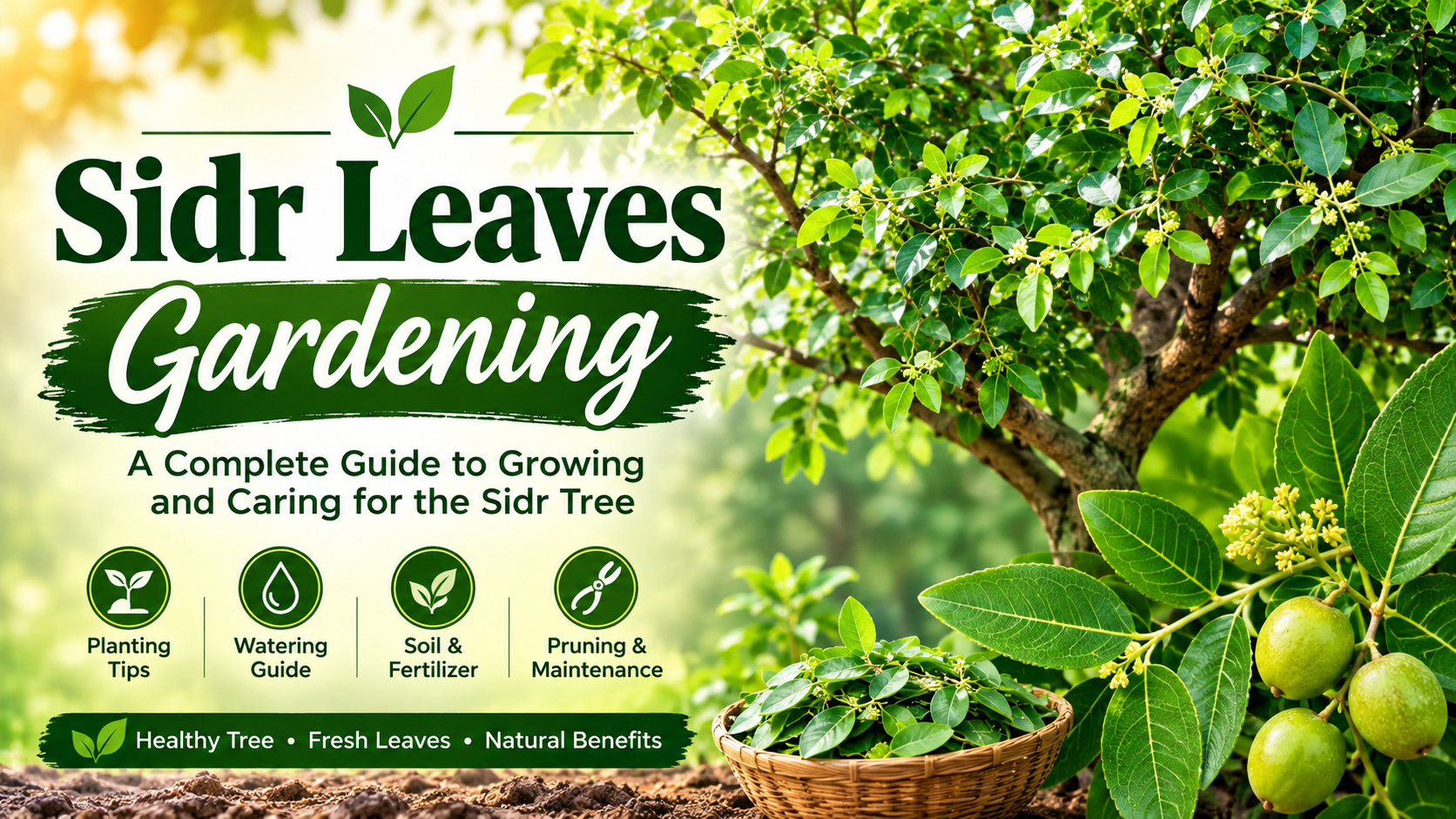
Sidr leaves come from the Sidr tree, also known as the jujube tree in many regions. Scientifically known as Ziziphus spina-christi, the Sidr tree is valued for its hardy nature, attractive foliage, useful fruit, and traditional importance. Growing a Sidr tree can be a rewarding gardening project because the plant can tolerate warm and relatively dry conditions while providing shade and greenery. With the right location, soil, watering routine, and basic care, gardeners can successfully grow and maintain a healthy Sidr tree.
Understanding the Sidr Tree
The Sidr tree is a hardy evergreen or semi-evergreen tree that grows naturally in parts of the Middle East, Africa, and South Asia. It is well adapted to hot climates and can survive conditions that may be challenging for many other garden plants. Its branches can develop a spreading shape, making the tree useful for creating shade in gardens and outdoor spaces.
The leaves are usually small, oval-shaped, and green, while mature trees can produce small flowers followed by edible fruits. Because of its ability to handle heat and relatively dry conditions, Sidr can be an excellent choice for gardeners living in warm regions.
Choosing the Right Location
Selecting a suitable location is one of the most important steps in Sidr gardening. Sidr trees generally perform best in an area that receives plenty of direct sunlight. A location with several hours of sunlight each day can encourage healthy leaf development and stronger growth.
The tree should also have enough space to spread its branches and roots. Avoid planting it too close to walls, buildings, underground pipes, or other large trees. Giving the Sidr tree adequate room from the beginning can prevent problems as it becomes larger.
Preparing the Soil
Sidr is relatively adaptable when it comes to soil, but good drainage is important. Waterlogged soil can create unhealthy conditions around the roots. Before planting, loosen the soil and remove large stones, weeds, and debris.
If the soil is heavy and holds too much water, gardeners can improve its structure by incorporating suitable organic material. Well-prepared soil allows roots to spread more easily and helps the young tree establish itself.
A soil test can also be useful for gardeners who want to understand the nutrient and pH conditions of their garden. However, Sidr’s natural hardiness means it does not necessarily require highly fertile soil to survive.
Planting a Sidr Tree
Sidr can be grown from seeds or young nursery plants. Growing from seed can be an interesting experience, although it may take longer to establish a mature tree. A healthy young plant is often a more convenient choice for gardeners who want faster establishment.
Dig a hole that is wider than the root system of the young plant. Place the tree carefully in the center, keeping the root area at an appropriate level with the surrounding soil. Fill the hole with soil and gently press it around the roots. Water the newly planted tree thoroughly to help settle the soil.
During the early stage, the young Sidr tree needs more attention than an established tree. Regular monitoring can help gardeners identify problems before they become serious.
Watering Requirements
One of the advantages of Sidr gardening is that mature trees can tolerate relatively dry conditions. However, this does not mean that newly planted trees should be left without water.
Young trees need consistent moisture while their roots are developing. Water deeply rather than giving only a small amount of water to the surface. As the tree becomes established, watering can gradually be reduced depending on rainfall, soil conditions, temperature, and local climate.
Overwatering should be avoided. Constantly wet soil may interfere with healthy root development. Checking the soil before watering is a simple way to determine whether additional moisture is necessary.
Fertilizing the Sidr Tree
Sidr trees generally do not require excessive fertilizer. If the soil is poor, a balanced fertilizer or well-decomposed organic compost may support healthy growth. Fertilizer should be applied carefully because excessive nutrients can cause unnecessary leafy growth or damage the plant.
Adding organic matter around the tree can also improve soil structure. However, mulch or compost should not be piled directly against the trunk. Leaving a small gap around the trunk helps maintain healthy conditions.
Pruning and Maintaining Sidr Leaves
Pruning can help maintain the shape and structure of a Sidr tree. Remove dead, damaged, or diseased branches when necessary. Crossing branches can also be trimmed if they rub against each other and create wounds.
Young trees can benefit from careful formative pruning, which encourages a strong structure as they mature. Avoid removing excessive amounts of healthy growth at one time. Regular, moderate maintenance is generally better than severe pruning.
The leaves should also be observed regularly. Changes in leaf color, unusual spots, wilting, or premature leaf loss may indicate problems with water, nutrients, pests, or disease.
Protecting the Tree From Pests
Although Sidr is a hardy plant, it can still experience pest problems. Gardeners should regularly inspect the leaves, stems, and young shoots for insects or other signs of damage.
Early detection is important. Removing affected leaves or branches when appropriate can help prevent a small problem from spreading. Gardeners should identify the pest before applying any treatment and follow the instructions for any garden product carefully.
Encouraging beneficial insects and maintaining general garden cleanliness can also contribute to a healthier growing environment.
Harvesting and Using Sidr Leaves
Sidr leaves have been valued in traditional practices in several cultures. They are sometimes collected for household, cultural, or personal-care purposes. If leaves are being harvested, they should come from a healthy tree that has not recently been treated with inappropriate chemicals.
Harvesting should be done carefully so that the tree continues to grow strongly. Instead of removing large quantities from one area, collect leaves selectively from different parts of the tree. This allows the plant to maintain sufficient foliage for photosynthesis and continued development.
Benefits of Growing a Sidr Tree
Growing a Sidr tree can provide several gardening benefits. Its foliage adds greenery to outdoor spaces, while a mature tree can provide useful shade. Its flowers and fruit can also contribute to the biodiversity of a garden by attracting various forms of wildlife.
Another major advantage is its tolerance of warm and relatively dry environments. For gardeners in regions where water conservation is important, choosing plants that are naturally adapted to local conditions can make garden maintenance easier.
The Sidr tree can also add cultural and traditional character to a landscape, making it more than simply an ornamental plant.
Common Mistakes to Avoid
Beginners sometimes make the mistake of watering Sidr trees too frequently. Because the tree is naturally adapted to warm and dry conditions, excessive irrigation can be unnecessary.
Another common mistake is planting the tree in a location without enough sunlight or space. Poor drainage can also create long-term problems. Excessive pruning and over-fertilization should be avoided as well.
The best approach is to observe the tree and adjust its care according to its growth, soil, weather, and overall condition.
Final Thoughts
Sidr leaves and the Sidr tree offer an interesting opportunity for gardeners who want a hardy, useful, and attractive plant. With plenty of sunlight, well-drained soil, appropriate watering, and occasional pruning, a Sidr tree can become a long-lasting feature of a garden.
The key to successful Sidr gardening is not complicated care but consistency and observation. By understanding the tree’s natural needs and avoiding excessive watering, fertilizer, and pruning, gardeners can encourage healthy growth and enjoy the beauty and usefulness of this remarkable plant for many years.
Leave a Reply