
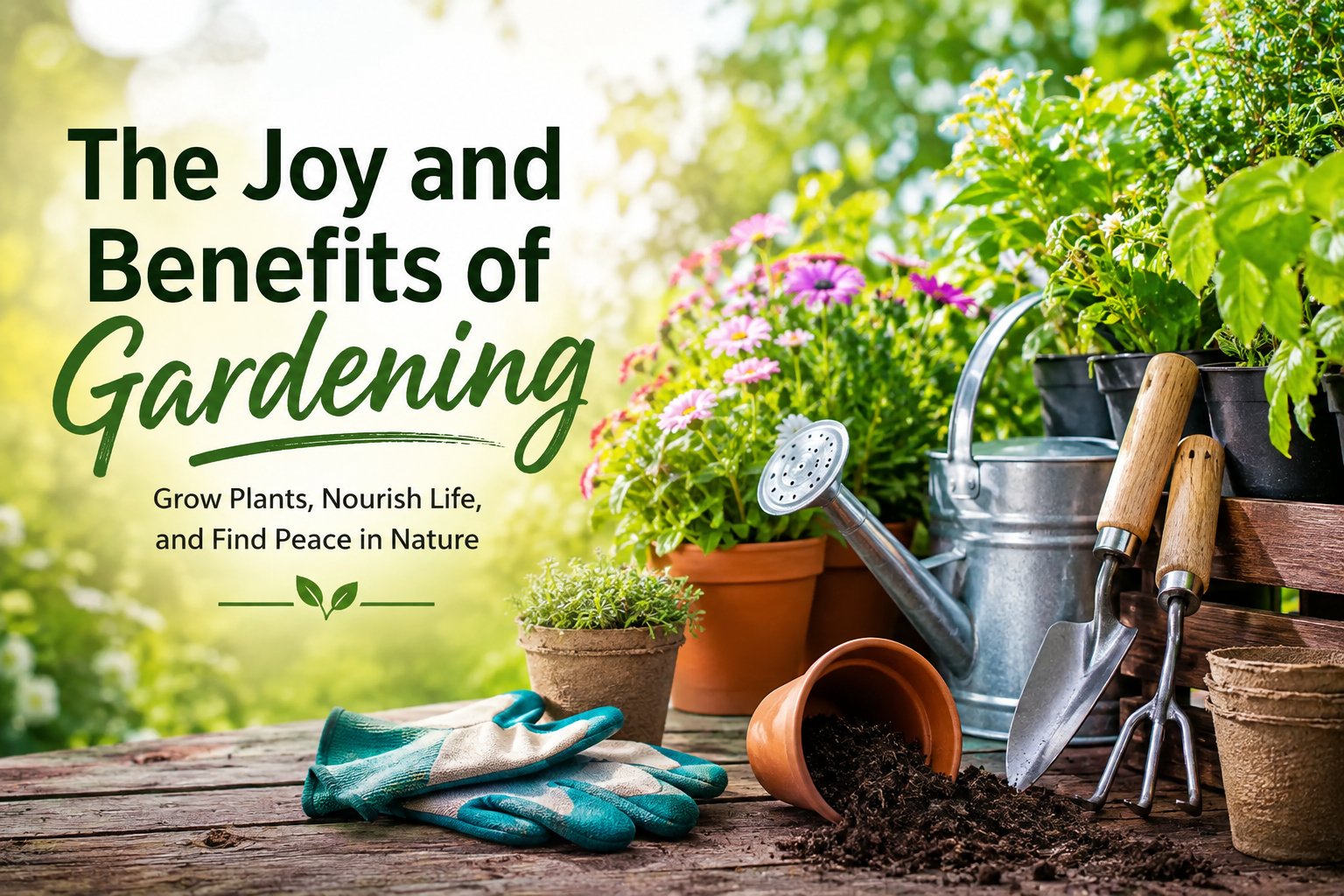
Gardening is more than simply planting flowers, vegetables, or trees in the soil. It is a rewarding activity that connects people with nature and creates a sense of peace, responsibility, and accomplishment. Whether someone has a large backyard, a small balcony, or only a few pots near a window, gardening can become an enjoyable part of everyday life. It allows people to watch something grow from a tiny seed into a healthy plant while learning valuable lessons about patience and care.
One of the greatest attractions of gardening is its ability to bring nature closer to our homes. Modern life often keeps people busy with computers, phones, traffic, and other responsibilities. Spending time among plants provides an opportunity to step away from these distractions. The sight of green leaves, colorful flowers, and fresh vegetables can make an ordinary space feel more welcoming. Even a small garden can transform a dull corner into a peaceful place.
Gardening also offers important physical benefits. Digging soil, planting seeds, removing weeds, carrying watering cans, trimming plants, and moving pots require physical movement. These simple activities can help people stay active without feeling as though they are performing a formal workout. Gardening can be particularly enjoyable because the effort produces a visible result. After working in the garden, people can look at the plants and see how their efforts have contributed to their growth.
Another valuable benefit is the effect gardening can have on mental well-being. Caring for plants encourages people to slow down and pay attention to the present moment. Watering a plant, observing new leaves, or removing damaged branches can become a calming routine. Gardening requires patience because plants do not grow instantly. This natural pace can teach people to accept that meaningful results often take time. For many gardeners, the garden becomes a quiet place where they can relax and clear their minds.
Growing food at home is another reason people choose to garden. Vegetables such as tomatoes, peppers, lettuce, spinach, carrots, and beans can be grown in many home gardens. Herbs such as mint, basil, coriander, and rosemary can also grow successfully in containers. Homegrown produce can provide a satisfying alternative to vegetables purchased from stores. When people grow their own food, they can also become more aware of how food is produced and how much care is required before it reaches the kitchen.
Gardening can also encourage healthier eating habits. A person who grows vegetables may become more interested in preparing fresh meals. Children, especially, can learn where food comes from by participating in planting and harvesting. A child who helps grow a tomato or a strawberry may be more excited to taste it. In this way, gardening can turn food production into an educational and enjoyable family activity.
There are also environmental advantages to gardening. Plants absorb carbon dioxide and release oxygen, while trees and shrubs can provide shade and shelter for birds and insects. A garden can create a small habitat for butterflies, bees, ladybirds, and other useful creatures. By choosing a variety of plants, gardeners can support local biodiversity. Native plants are often particularly valuable because they are adapted to the local climate and can provide resources for wildlife.
Good gardening does not require expensive equipment. Beginners can start with a few basic tools, suitable soil, seeds or young plants, and a container or small piece of land. The most important requirement is attention. Different plants need different amounts of sunlight, water, space, and nutrients. Before planting, it is useful to understand the conditions of the chosen location. A sunny balcony, for example, may be excellent for herbs and vegetables that need plenty of light, while a shaded area may be better suited to plants that tolerate low sunlight.
Watering is an important part of plant care, but more water is not always better. Overwatering can damage roots and create conditions that encourage disease. Gardeners should learn to check the moisture of the soil before watering. Mulching can also help conserve moisture and reduce weed growth. Organic materials such as dry leaves, compost, or other suitable garden materials can improve soil quality over time.
Compost is another useful resource for gardeners. Kitchen scraps such as vegetable peels and certain garden waste can be transformed into nutrient-rich compost when managed properly. Compost improves soil structure and provides nutrients for plants. It also reduces the amount of organic waste sent to landfills. Making compost therefore combines gardening with an environmentally responsible habit.
Gardening also teaches valuable life lessons. A gardener learns that success requires consistency. Seeds need suitable conditions, young plants need protection, and mature plants still require care. Sometimes a plant fails despite careful attention. Instead of giving up, gardeners can examine what went wrong and try again. This process develops patience, observation, and problem-solving skills. These qualities are useful far beyond the garden.
Gardening can bring families and communities together as well. Parents and children can work on a garden project together, while neighbors can exchange seeds, plants, advice, and fresh produce. Community gardens provide shared spaces where people can grow food and meet others. Such gardens can strengthen relationships and encourage cooperation.
In conclusion, gardening is a simple activity with remarkably wide-ranging benefits. It can make homes more beautiful, provide fresh food, encourage physical activity, support mental relaxation, and contribute to a healthier environment. Most importantly, gardening reminds us that growth takes time and care. A small seed may seem insignificant when placed in the soil, but with sunlight, water, nutrients, and patience, it can become something beautiful and useful. For anyone looking for a meaningful hobby that connects daily life with nature, gardening is an excellent place to begin.
Leave a Reply